The New Nordic Wealth Elites and the Future of the Welfare State
Department seminar with Hanna Kuusela, University of Jyväskylä
The Nordic welfare model is often considered a global benchmark for social and economic equality. Its universalist ethos was built on a cross-class alliance and the idea that, to sustain its legitimacy, all citizens—including the affluent—should have a stake in the welfare state. This talk examines elite views of the Nordic model in Finland, showing how wealthy Finns are currently renegotiating their relationship with the welfare state.
Drawing on interview studies with wealthy individuals in Finland, the talk explores the gradual and uneven erosion of the universalist ethos among the affluent, as well as the emergence of so-called welfare profit-makers: actors who have economically benefited from the marketization of welfare provision. It examines how wealthy individuals engage in moral boundary work, distinguishing between deserving and undeserving groups and between legitimate and illegitimate forms of welfare provision. The analysis suggests that the crisis of the Nordic model is not only fiscal but also, and perhaps more fundamentally, moral. The redistributive imaginary that sustained the model appears to be weakening as a universalist understanding of welfare is increasingly replaced by selective and conditional moral frameworks.
The talk draws on two large interview-based research projects on the wealthy in Finland conducted by Kuusela together with Anu Kantola and Laura Tarkiainen over the past decade.
Bio
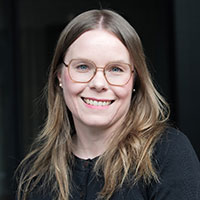 At this Department Seminar, we warmly welcome Hanna Kuusela, who is an associate professor at the Department of Social Sciences and Philosophy at the University of Jyväskylä, Finland. Hanna Kuusela is working in the intersection of culture and economy. Her research interests include economic elites, cultural analysis of capital, consultocracy, contemporary cultural formations as well as university autonomy in the post democratic age.