Social platforms have increasingly become spaces where hateful and mainstream content intersect. Prior research shows that mainstream young people routinely encounter hateful material online, while ideologically extreme groups operate within the very same digital ecosystems.
At the center of this overlap lies the meme – a type of small, humorous, and highly shareable images or videos. Their layered meanings make them difficult to moderate, enabling extremist actors to evade both platform sanctions and social sanctions. But it is not only the meme that sits at the core of this intersection – next to it sits the mainstream youth who encounter, interpret, and play with these artifacts.
To understand the social processes that shape online hate, we must therefore examine how young people engage with and negotiate the meanings of and norms surrounding hateful memes. In this dissertation, I address this challenge through the research question: How do young people negotiate the meanings of, and the norms surrounding, hateful content on the group-based internet? I approach this question from a microsociological angle, drawing on two years of multi-researcher ethnography across eight social platforms, resulting in 217 meso-level ethnographic notes, 342 micro-level observations, and 55 interviews across 103 pages, groups, and forums.
Assessment Committee
Pernille Krogh Ohms
Professor Bente Halkier, University of Copenhagen, Denmark (chair)
Professor Joseph B. Walther, University of California, Santa Barbara, USA
Professor Lars E.F. Johannesen, Oslo Metropolitan University, Norway
Supervisor
Professor Jakob Johan Demant, University of Copenhagen
After the defence, there will be a reception from 17:00 – 18:30 in building 35, in front of the auditorium.
Details
Time:
13 Mar. 2026,
14:00-17:00
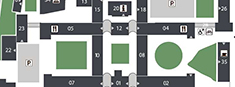
Place: The Faculty of Social Sciences, room 35.01.05, building 35, Gammeltoftsgade 15, 1355 Copenhagen